CALL +371 27 333 507 or E-MAIL info@metabend.eu

Top 4 Aluminium Bending Methods Explained: Rotary, Roll, and More
Explore the most effective aluminium bending methods including rotary draw, roll bending, and more. Ideal for windows, facades, and custom profiles.
Andrejs Lukicevs, Founder of MetaBend
7/31/20252 min read
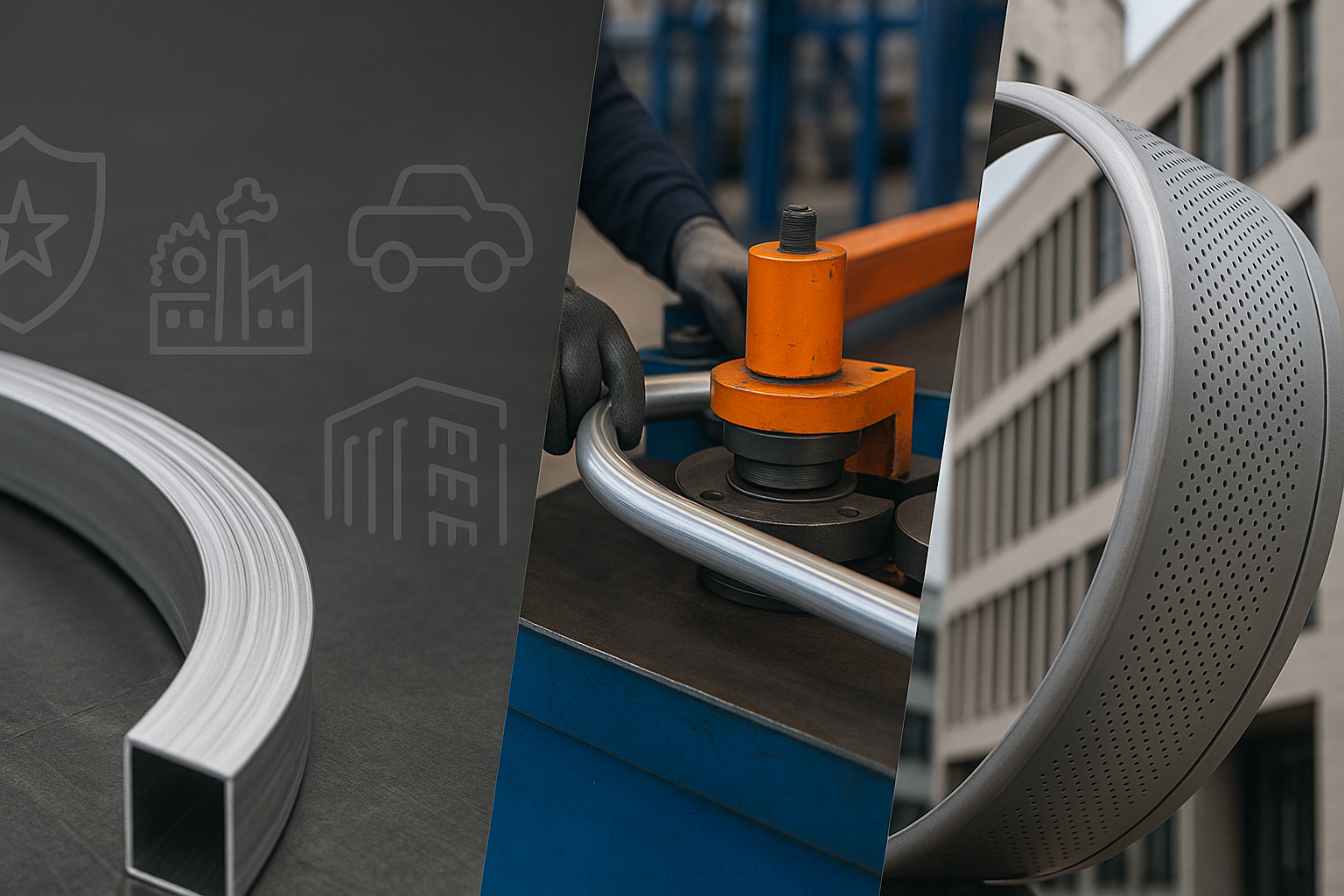
Aluminium Bending Methods: Which One Is Right for Your Industry?
Aluminium bending is essential in a wide range of industries—from defence and aerospace to architecture, transport, furniture, and machinery. Whether you're forming structural parts for vehicles, lightweight components for equipment, or architectural elements, choosing the right bending method is key to performance and cost-efficiency. In this guide, we break down the top aluminium bending methods—rotary draw, roll bending, compression, and mandrel bending—and how they apply across modern manufacturing sectors.
1. Rotary Draw Bending – For High Precision and Repeatability
Rotary draw bending is ideal when tight tolerances and clean visual lines are essential. It’s widely used in:
Defence and military equipment – such as lightweight frameworks and panel supports
Architecture – for curved window frames, railings, and decorative trims
Transportation – including rail, aerospace, and speciality vehicles
Furniture and lighting – where consistent shaping and aesthetics matter
Machinery and tooling – for precise brackets, guides, and guards
This method offers repeatability and quality, critical in both aesthetic and high-spec applications.
2. Roll Bending – Ideal for Long Radius and Large Profiles
Roll bending is suited to large-radius curves and long aluminium extrusions, making it ideal for:
Defence infrastructure – like mobile structures, enclosures, and support frames
Architectural facades – especially curved panels and arched structures
Transport and marine – for curved profiles in buses, trailers, and ships
Lighting and signage – where gentle arcs enhance visibility and design
It’s a flexible and efficient method for structural and architectural applications.
3. Compression Bending – Simple and Efficient for Basic Parts
Compression bending is useful for basic aluminium shapes, typically used in:
Furniture and retail – like bent metal stands or supports
General machinery and fabrication – where complexity is low, and function is key
Interior and military vehicle fixtures – such as brackets or racks
Though less suitable for tight radii or decorative parts, it’s fast and economical for simple geometries.
4. Mandrel Bending – Critical for Thin-Walled Aluminium Tubes
Mandrel bending supports thin-walled aluminium tubes during the bend, preventing wrinkles or collapse. Common uses include:
HVAC and fluid systems – used in military field equipment and vehicles
Defence vehicles and shelters – such as structural tubing for mobile systems
Automotive and motorsports – for roll cages, exhausts, and lightweight frames
Medical and accessibility products – where curved tubing must remain smooth and precise
This technique is essential when both form and function must be preserved under load.
Choosing the Right Aluminium Bending Method for Your Industry
When selecting a bending method, consider:
Wall thickness and profile complexity
Bend radius and material grade (e.g., 6063, 6082, 7075)
Volume and repeatability
Whether it's for load-bearing, visible, or high-performance use
Industry requirements – e.g., corrosion resistance, weight savings, tactical deployment
Whether you’re designing for civilian architecture or mission-ready defence systems, choosing the correct forming method maximises performance and minimises waste.
Why Choose MetaBend for Aluminium Bending?
At MetaBend, we serve a diverse range of industries, including defence, architecture, transportation, industrial manufacturing, furniture, and more.
We specialise in bending customer-supplied aluminium extrusions, supporting everything from prototypes to production runs with tight tolerances and quick lead times. With years of expertise in complex profiles, radii, and challenging materials, we help you get it right the first time.
👉 Contact MetaBend today to get a quote or discuss your project.